What you'll walk away with
- 01
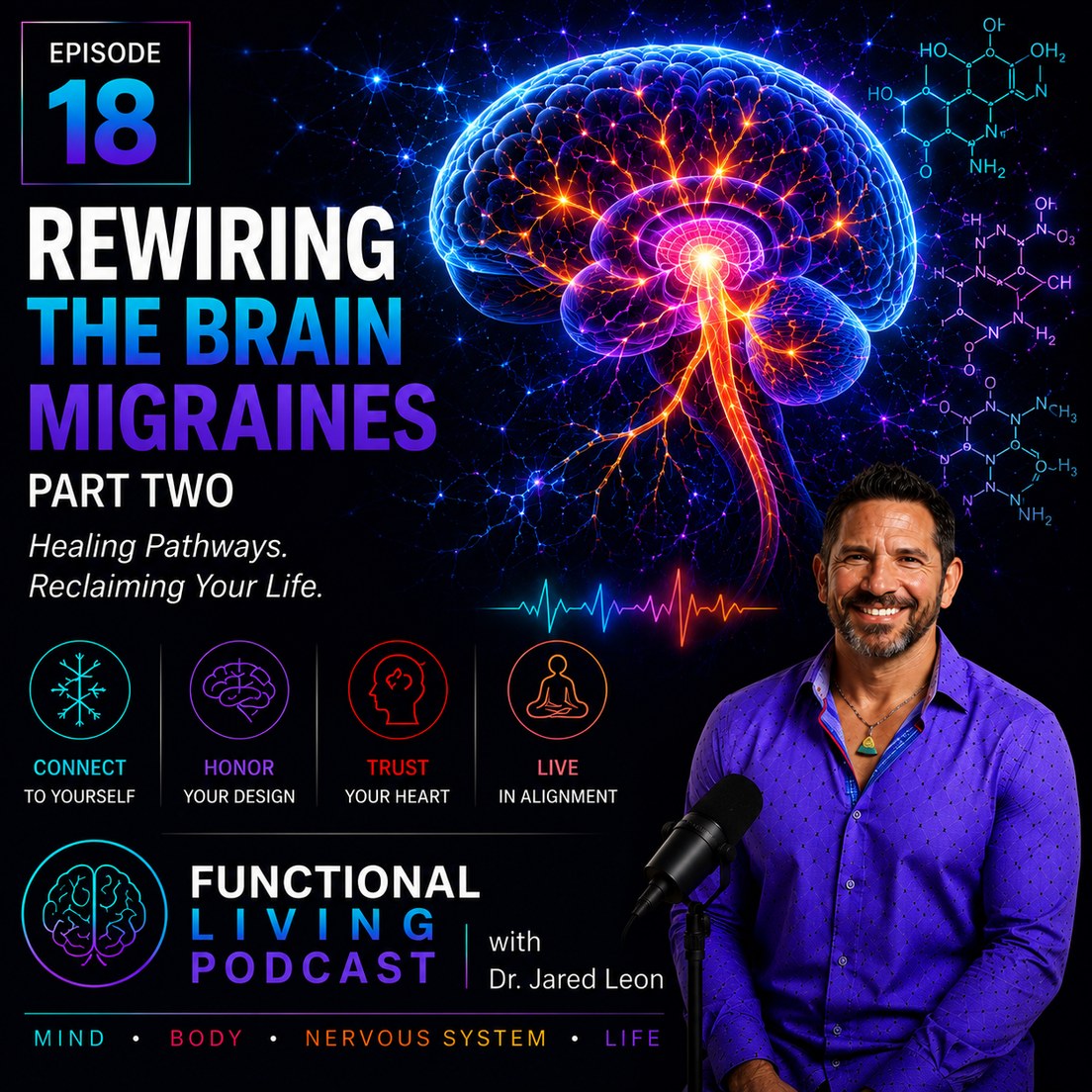
Migraines don’t just start with pain—they start long before you feel them.
- 02
Jared Leon continues the conversation from Part 1 by diving deeper into the timeline and neurological patterns behind migraines, and how understanding them is the key to taking control.
- 03
Leon explains how migraines can begin 24–72 hours before the pain even appears, in what’s known as the premonitory phase—a critical window most people overlook.
- 04
He challenges the common belief around triggers, emphasizing that they are often not the true cause, but rather signals that the brain is already under stress.
- 05
This episode introduces the powerful concept of the brain’s “volume control”—how overstimulation can amplify sensitivity, and why learning to turn that volume down is essential for resetting the system.
What to do this week
Reflect on this: Migraines don’t just start with pain.
Reflect on this: Jared Leon continues the conversation from Part 1 by diving deeper into the timeline and neurological patterns behind migraines, and how understanding them is the key to taking control.
Reflect on this: Leon explains how migraines can begin 24–72 hours before the pain even appears, in what’s known as the premonitory phase.
“Migraines don’t just start with pain—they start long before you feel them.”
What the neuroscience is doing
Go deeper on the mechanisms
A migraine you feel more in your balance system than in your head — and why it responds to inputs, not just medication.
Your brain changes based on what you repeatedly do — for better or for worse.
Stress is a nervous-system state, not a mood — and states can be trained.
What is this episode about?
Migraines don’t just start with pain—they start long before you feel them.
What's the most important idea from this episode?
Jared Leon continues the conversation from Part 1 by diving deeper into the timeline and neurological patterns behind migraines, and how understanding them is the key to taking control.
How does this connect to brain performance?
Leon explains how migraines can begin 24–72 hours before the pain even appears, in what’s known as the premonitory phase—a critical window most people overlook.